6 Cities, 8 Universities: Ukrainian Week in Spain Concludes with Launch of New Ukrainian Studies Programs
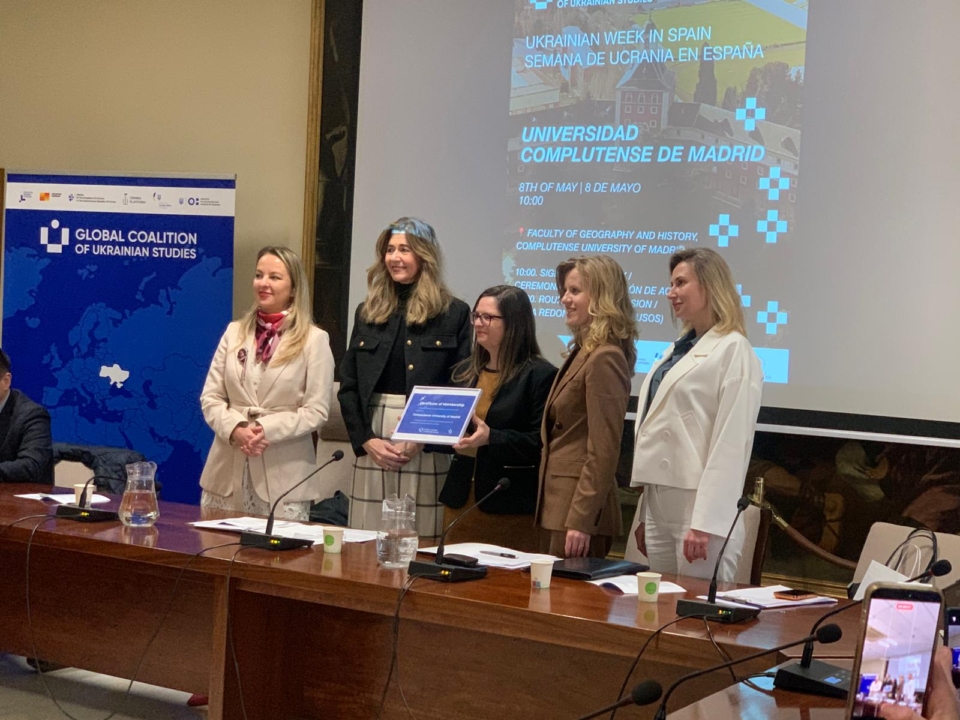
Ukrainian Week took place across Spain, bringing together leading universities in Barcelona, Valencia, Salamanca, Valladolid, the Basque Country, and Madrid around a shared goal: to establish knowledge about Ukraine as a lasting part of the European academic landscape.
The program spanned six cities and eight universities: Universitat Politècnica de Catalunya, Universitat Pompeu Fabra, University of Barcelona, University of Valencia, University of Salamanca, University of Valladolid, University of the Basque Country, and Universidad Complutense de Madrid.
Throughout the week, the Ukrainian delegation held institutional meetings with the leadership of Spanish universities, delivered public lectures, participated in panel discussions, presented the Global Coalition of Ukrainian Studies, and organized cultural and academic events. Key themes included the development of Ukrainian studies, Ukraine’s role in the future of Europe, countering Russian disinformation, Ukrainian culture as a pillar of resilience and security, education during wartime, the translation of Ukrainian literature, and the presence of the Ukrainian language in Spanish universities.
The initiative was organized by the Global Coalition of Ukrainian Studies, operating under the patronage of Olena Zelenska, in coordination with the Fund of the President of Ukraine for Education, Science, and Sports, the Ukrainian Institute, the Crimea Platform, the Representation of the President of Ukraine in the Autonomous Republic of Crimea, the Ministry of Education and Science of Ukraine, the Ministry of Foreign Affairs of Ukraine, and the Embassy of Ukraine in Spain.
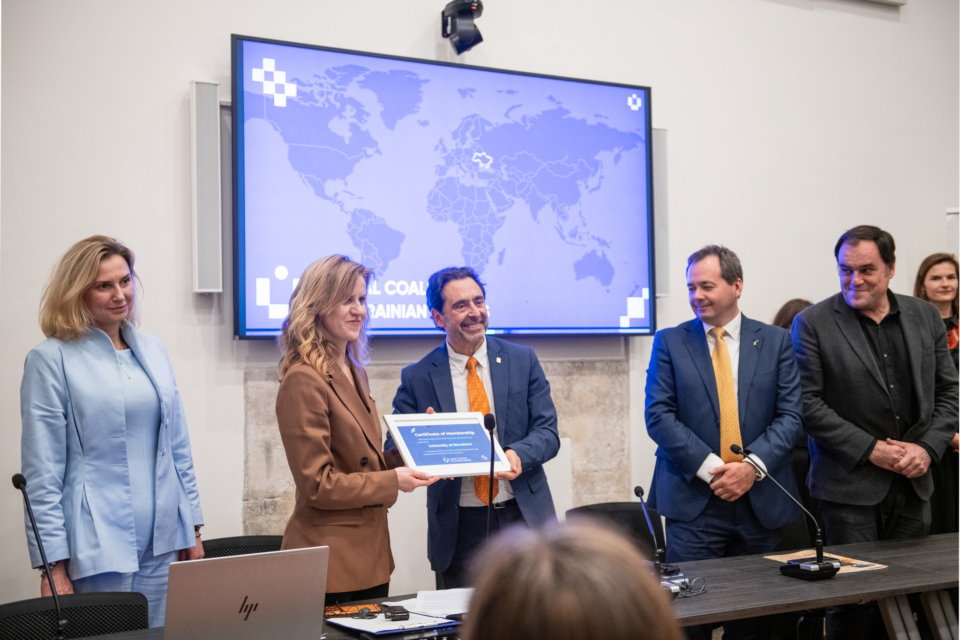
The week’s most significant practical outcome was the strengthening of the Spanish branch of the Global Coalition of Ukrainian Studies. During the program, cooperation memorandums were signed with the University of Salamanca, University of the Basque Country, and Universidad Complutense de Madrid. The University of Barcelona and Universidad Antonio de Nebrija already joined the Coalition in December 2025, while the University of Granada is currently finalizing the technical procedures required to sign its memorandum.
For Ukraine, this marks an expansion of its long-term academic presence through new courses, joint research initiatives, exchanges, public discussions, translations, work with Ukrainian-language sources, and institutional partnerships between Ukrainian and Spanish universities.

May 5, Valencia: A Step Toward Ukrainian Studies at the University of Valencia
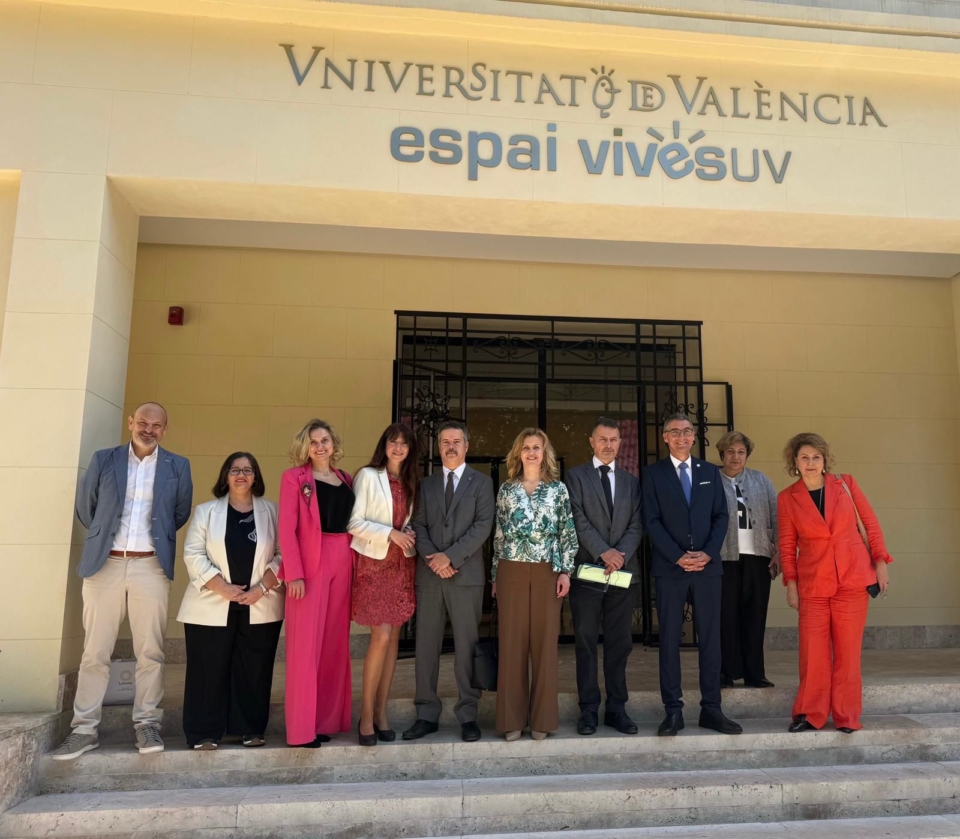
The second day of Ukrainian Week took place at the University of Valencia. The program combined institutional meetings with university representatives, presentations on international priorities, an open lecture by Nataliia Kryvda, and a panel discussion on contemporary Ukrainian culture.
The University of Valencia already maintains an active Ukrainian dimension. The university hosts a Ukrainian Society and runs the initiative “Universitat de València with Ukraine”, aimed at supporting Ukrainian students and scholars affected by Russia’s full-scale invasion. The university is also part of the Una Europa network, which supports Ukrainians through joint educational modules and academic cooperation.
Following the meetings, both sides agreed to work toward the gradual introduction of Ukrainian studies at the University of Valencia. This direction is important for Ukraine because it combines humanitarian support for Ukrainians with systematic academic engagement with Ukraine itself. Supporting students and scholars allows them to continue their studies and research, while Ukrainian studies create sustainable knowledge about the country, its history, culture, language, political experience, and resistance to Russian aggression.
May 6, Salamanca: European Security and Ukrainian Scholarship
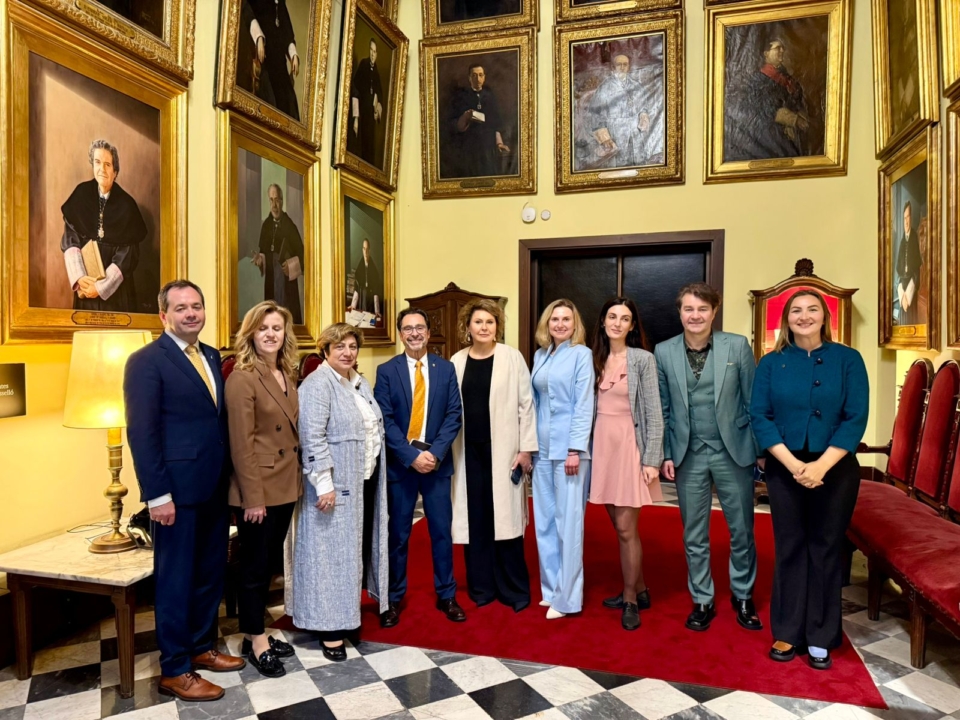
The third day took place at the University of Salamanca, one of Europe’s oldest universities, founded in 1218. The program opened with the launch of the virtual exhibition “Ukrainian Names in World Science”, dedicated to the contribution of Ukrainian scholars to global scientific development.
The central event of the day was a lecture by Pavlo Klimkin titled “Ukraine after 2022: How the War Is Changing Europe’s Future”. He discussed how Russia’s full-scale war against Ukraine has transformed Europe’s security architecture, strengthened Ukraine’s strategic role, and forced Europe to reconsider its own political and security order.
The lecture was followed by the expert panel “Who Shapes the New European Order? Ukraine as a Security Actor, Not an Object of Policy”. Participants included Pavlo Klimkin, Oleksandr Bevz, Yevhen Fedchenko – Editor-in-Chief of StopFake and Professor at the Mohyla School of Journalism – and Tetiana Zhukova from the ZMINA Human Rights Center.
One of the most important outcomes of the day was the signing of a memorandum of cooperation with the University of Salamanca. The parties also discussed the future establishment of a dedicated Ukrainian center within the university, which could unite academic, cultural, and research initiatives related to Ukraine.
A separate part of the program focused on the COMMUNIKITE project, which addresses the linguistic, cultural, and social integration of immigrants and refugees. The day concluded with a roundtable discussion on Ukrainian literature within Europe’s emerging Ukrainian diaspora.
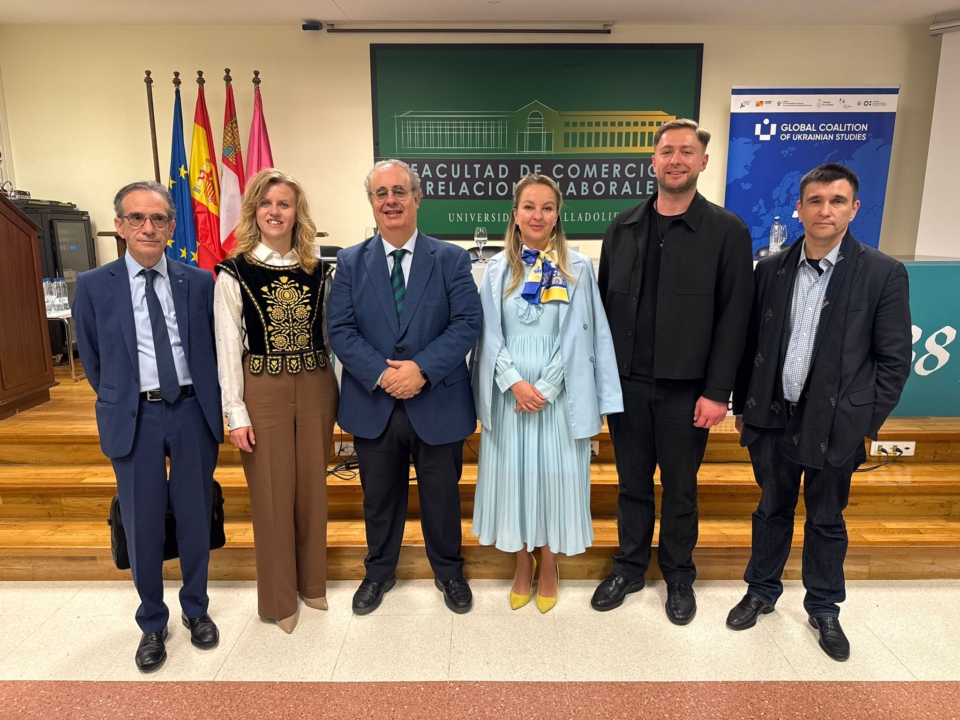
May 7, Valladolid and the Basque Country: Two Platforms, One Day
The fourth day of Ukrainian Week took place simultaneously in two cities: Valladolid and Vitoria-Gasteiz.
At the University of Valladolid, the Ukrainian delegation held meetings with university leadership, participated in a press conference featuring Yuliia Sokolovska, Ambassador Extraordinary and Plenipotentiary of Ukraine to the Kingdom of Spain and the Principality of Andorra, and joined a public discussion with students and faculty members. The conversation focused on Ukraine’s role in Europe’s future, international security, strategic communication, and the global consequences of Russia’s war against Ukraine.
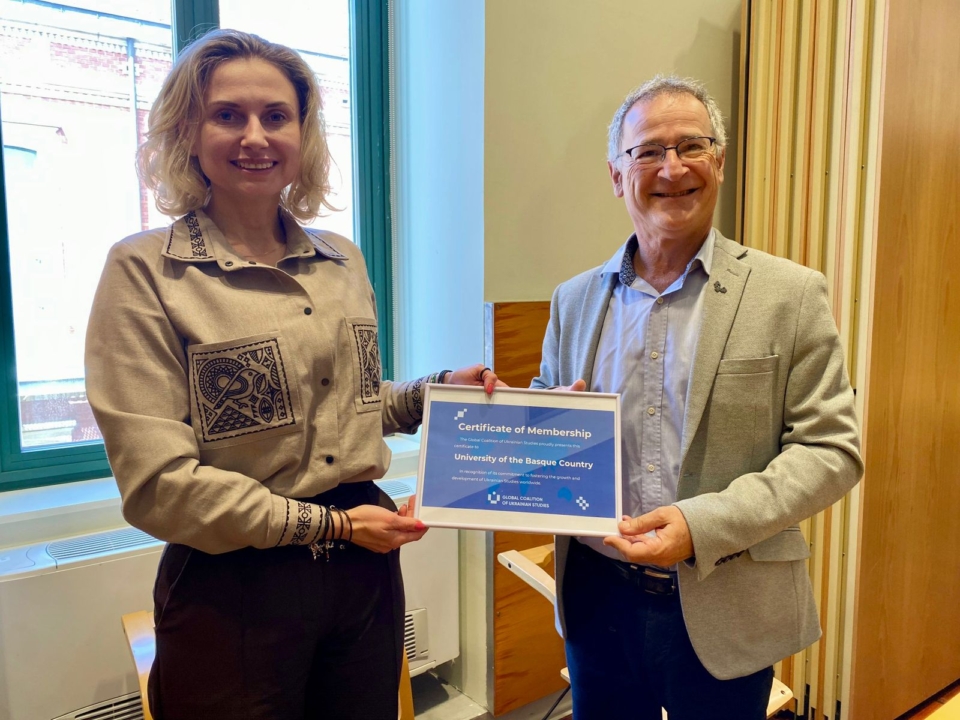
At the same time, an institutional meeting took place in Vitoria-Gasteiz at the University of the Basque Country. The parties discussed future academic cooperation, including the integration of Ukraine-related topics into educational programs, guest lectures, joint events, and future academic exchanges. The meeting concluded with the signing of a memorandum of cooperation between the university and the Global Coalition of Ukrainian Studies.
May 8, Madrid: A Memorandum and an Exhibition on Education During War
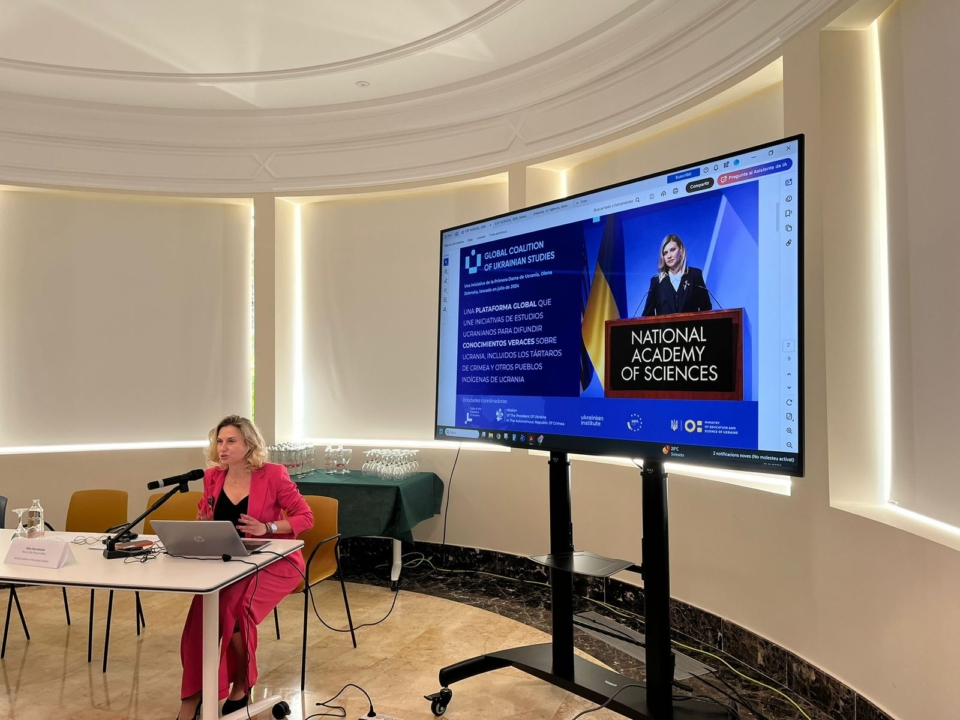
The final day took place at the Faculty of Geography and History of the Universidad Complutense de Madrid. The Global Coalition of Ukrainian Studies presented the symbolic exhibition-installation “One Desk. Two Marks”. At the center of the installation stood a school desk divided into two parts: one symbolizing education in peace, the other marked by war. The installation reflected on how education shapes knowledge, values, resilience, and the future of societies.
The exhibition will remain on display at the Faculty of Geography and History for several weeks and will be open to students, faculty members, and visitors.
During the event, a memorandum of cooperation was signed with the Universidad Complutense de Madrid. Participants also visited the exhibition “A Spanish Perspective on Ukrainian History and Culture: Books in Spanish on Ukraine”, prepared by the faculty library. The exhibition featured Spanish-language publications and research on Ukrainian history, culture, politics, and contemporary developments.
The academic part of the day focused on three perspectives of Ukrainian-Spanish relations: history, international law, and contemporary geopolitics. Participants included historian and author on Ukrainian history Pavlo Klimkin, Oleksandr Bevz, and Yuliia Sokolovska.
The program continued at the Embassy of Ukraine in Spain, where a roundtable discussion brought together representatives of Spanish universities, the Ukrainian delegation, and partner institutions. Organized by the Global Coalition of Ukrainian Studies, the discussion served as a practical platform for planning the next stage of Ukrainian-Spanish academic cooperation.
Ukrainian Week concluded with an open professional dialogue and informal networking among participants, laying the groundwork for new joint initiatives in 2026.
Why It Matters
Ukrainian Week in Spain formed part of a broader effort to advance the global Study of Ukraine – sustainable Ukrainian studies programs that examine Ukraine through its language, primary sources, history, culture, science, law, political experience, Crimea, the Indigenous peoples of Ukraine, and Russia’s ongoing war against Ukraine.
This work also carries strategic security importance. For years, Russia invested heavily in institutional networks designed to promote its narratives abroad, including through organizations such as Rossotrudnichestvo, the Russkiy Mir Foundation, the Gorchakov Fund, and the international export of “Russian studies.” These instruments frequently portrayed Ukraine as merely part of Russian history, culture, or political space.
Ukraine is responding differently: through direct inter-university partnerships, the development of Ukrainian studies, support for scholars, translations, academic exchanges, public lectures, archival work, and the integration of Ukrainian institutions into international academic dialogue. This approach builds an infrastructure of accurate knowledge.
For the Fund of the President of Ukraine for Education, Science, and Sports, this work is linked to a broader mission: preserving human capital, developing talent, strengthening Ukrainian education and science, and creating international opportunities that benefit Ukraine. When Ukrainian students, scholars, and educators establish direct ties with leading universities worldwide, Ukrainian education gains new resources, partnerships, and visibility. And when global universities study Ukraine through Ukrainian sources, young Ukrainians see their country as part of the global intellectual landscape.
The next phase will focus on developing detailed cooperation plans with Spanish universities for 2026, including the launch or expansion of Ukraine-related courses, the preparation of public events, the development of expert exchanges, fundraising for sustainable Ukrainian studies programs, and the coordination of partnerships with Ukrainian universities.
Organizers and Partners
Ukrainian Week in Spain was organized by the Global Coalition of Ukrainian Studies, operating under the patronage of Olena Zelenska, with the participation of the Fund of the President of Ukraine for Education, Science, and Sports, the Ukrainian Institute, the Crimea Platform, the Representation of the President of Ukraine in the Autonomous Republic of Crimea, the Ministry of Education and Science of Ukraine, the Ministry of Foreign Affairs of Ukraine, and numerous Ukrainian and Spanish partners.
Background
The Fund of the President of Ukraine for Education, Science, and Sports was established to implement strategic initiatives in the field of human capital development. The institution’s work focuses on strengthening the capacity of Ukrainian education, supporting talented young people, and expanding international scientific and academic cooperation. The Fund develops mechanisms to retain talent within Ukraine while creating opportunities for Ukrainian professionals to pursue international academic and professional development.
Following the start of Russia’s full-scale invasion, the Fund expanded programs aimed at helping Ukrainian education, science, and sports institutions engage international partners. Key initiatives include Twinning partnerships, UK–Ukraine dual degree programs, the development of safe educational environments, leadership programs for university management teams, UK-UA STEM PRO, and the UK-UA Visiting Professors Programme.
The Global Coalition of Ukrainian Studies is a state-led initiative operating under the patronage of Olena Zelenska. As of May 2026, the Coalition’s network includes 77 members from 26 countries, while an additional 130 international institutions have expressed interest in joining. The Coalition’s mission is to support and advance Ukrainian and Crimean Tatar studies worldwide, promote accurate knowledge about Ukraine, its culture, history, and language, and strengthen Ukraine’s capacity in humanitarian and cultural diplomacy.